

Our Story & Mission
The oldest bilingual Montessori school in France.
Our Founder
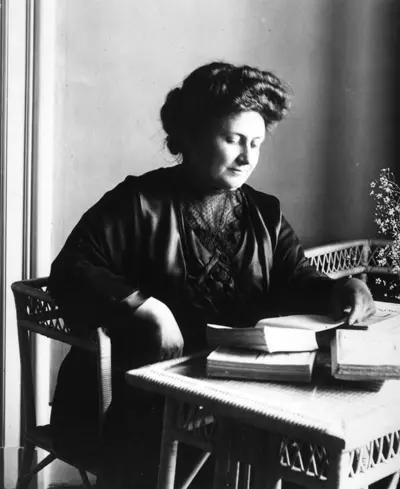
In 1963, while searching for a school for her three-year-old daughter in Larchmont, New York, Barbara Baylor Porter discovered the work of Maria Montessori. She co-founded the Larchmont Montessori School, received her AMI diploma from Mario Montessori in 1966, and went on to found the Ivanhoe Montessori School in Arlington, Virginia.
In 1972, with the support of Ambassador Arthur K. Watson, she opened the Bilingual Montessori School of Paris in the library of the American Cathedral with eight children, and forty by the end of the first year. Today, the school welcomes around 180 children each year from over 20 nationalities, and Barbara’s own children and grandchildren have been among them.
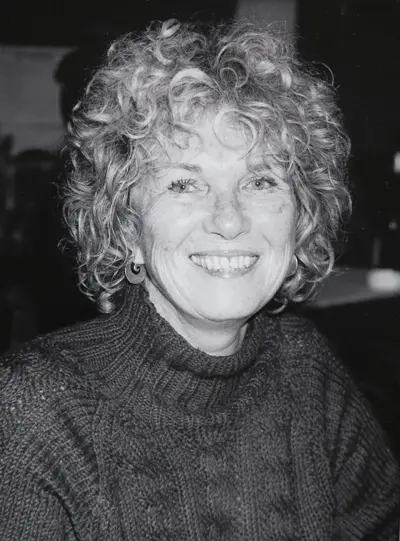
Doctor Maria Montessori (1870–1952)
Maria Montessori trained as a neurologist and was the first Italian woman to earn a medical degree. In 1907, she opened her first « Casa dei Bambini » (Children’s House) in Rome, where she began developing the educational method that bears her name.
Her approach rests on a few core principles: respect for the child as an individual, balanced development across intellectual, physical, and emotional dimensions, a carefully prepared classroom environment, cooperation rather than competition among children, and an emphasis on grace and courtesy. For Montessori, education was never only about acquiring knowledge — it was about preparing children for life itself. Her thinking was shaped in part by the earlier work of Jean Itard and Édouard Séguin.
Our Philosophy
Montessori education respects each child’s natural drive to learn and their need for independence, while giving balanced attention to their intellectual, physical, emotional, and spiritual development.
The mixed-age classroom
Children are grouped by age range (three to six, and six to nine), encouraging cooperation between older and younger students and allowing each child to progress at their own pace, rather than following whole-class instruction.
Freedom and responsibility
Children choose their own work within a structure set by their teachers — an approach that is neither permissive nor restrictive. Children learn best through their own discoveries.
The prepared environment
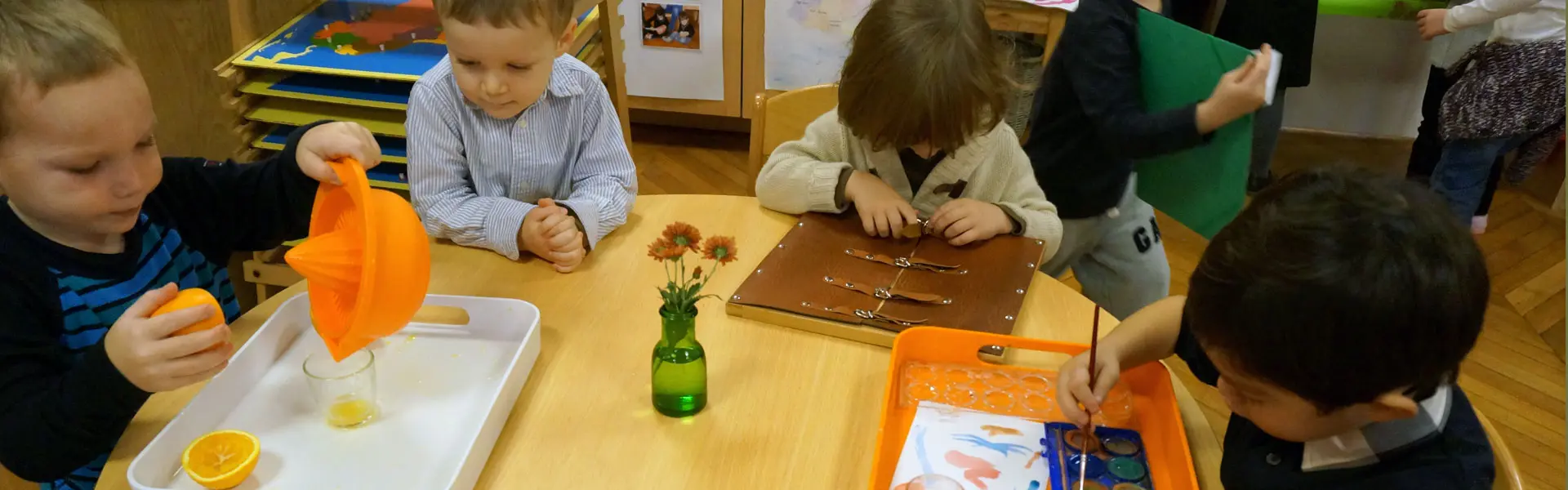
Classrooms are furnished with child-sized materials, arranged on accessible shelves, so that children build the habit of choosing, using, and returning their own work.
Physical activity
Movement is part of the learning process. Alongside their work, children have regular access to gym sessions and outdoor play to support their physical development.
Our Mission
Established in 1972, the Bilingual Montessori School of Paris supports the intellectual, physical, and emotional development of children, encouraging independence and self-discipline, and preparing each child for the next steps of their schooling.